Did you know that when it comes to improving indoor air quality, choosing the right filter is just as important as selecting the right home ventilation system?
The type of filter used can significantly impact the air you breathe, helping capture airborne particles such as dust, pollen, mould spores, pet dander, and other contaminants.
Two of the most commonly discussed filtration options are HEPA filters and MERV-rated filters. While both are designed to improve air quality, they serve different purposes and perform differently depending on the application.
Understanding the differences between HEPA and MERV filters can help homeowners make more informed decisions about airflow, filtration efficiency, energy consumption and overall home comfort.
In this guide, we’ll compare HEPA filters and MERV-rated filters, explain how they work, and explore why Ventis home ventilation systems utilise high-performance MERV 13 and MERV 15 filtration to deliver cleaner, healthier air throughout the home.
HEPA vs MERV Filter Comparison
There is a lot to consider when comparing HEPA and MERV filters, so we put the data into a table for easy comparison.
The comparison below highlights the key differences between HEPA and MERV 13 filters, helping to illustrate how each option performs in terms of particle capture, airflow, system compatibility and intended use.
Feature | HEPA Filter | MERV 13 |
Efficiency | Captures 99.97% of particles at 0.3 microns. | Captures 80% of particles at 0.3 – 1.0 microns. |
Best Used For | Hospitals, cleanrooms, and households with severe respiratory concerns. | Standard HVAC systems, commercial buildings, and everyday residential allergen reduction. |
Airflow Impact | Higher resistance. 2.0ms | Low resistance. 2.6ms Designed to allow HVAC systems to push air through efficiently without overloading the motor. |
Placement | Typically installed in standalone, portable air purifiers. | Installed directly into central heating, ventilation, and air conditioning (HVAC) ductwork. |
Ventis System Offers MERV 13 and MERV 15 Filters
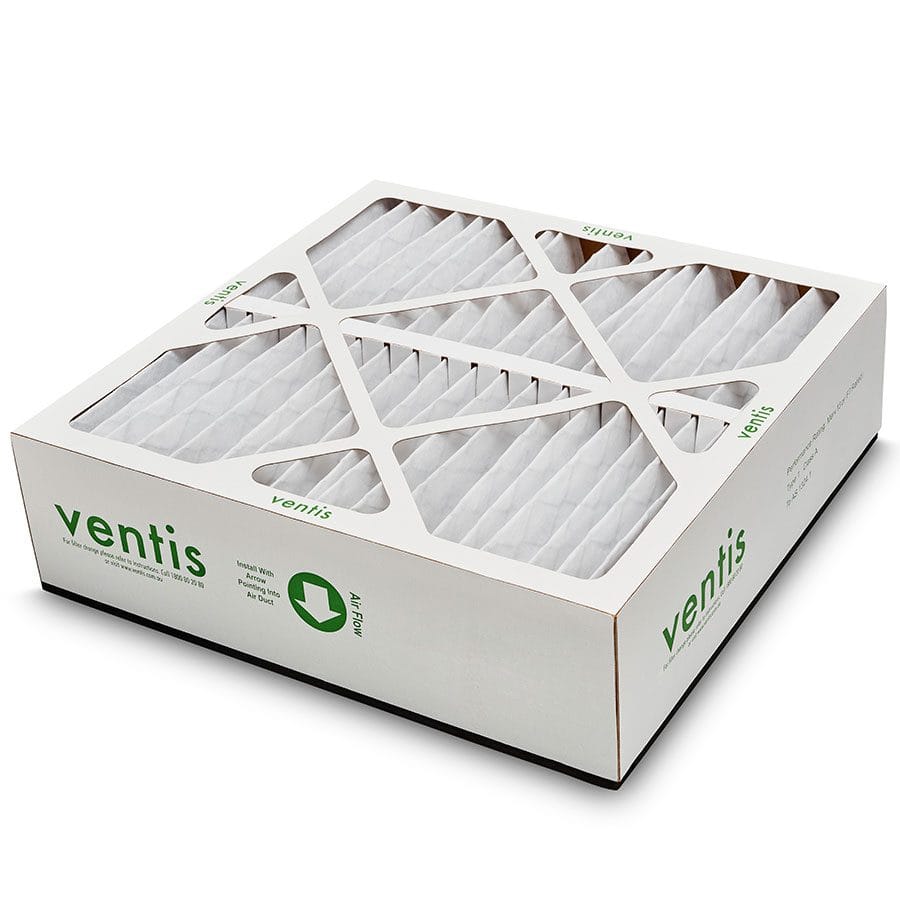
Ventis uses MERV 13 and MERV 15 Filters.
MERV stands for (Minimum Efficiency Reporting Value) ratings and measures how effectively an air filter captures airborne particles and contaminants from the air passing through a ventilation system.
The rating provides a simple way to compare filtration performance, with higher-rated filters capable of capturing smaller particles.
Within Ventis systems, MERV-rated filters help improve indoor air quality while maintaining efficient airflow and ventilation performance.
The table below shows the differences between MERV 13 and MERV 15 filters.
MERV 13 and MERV 15 Comparison
Feature | MERV 13 Ventis Standard | MERV 15 Ventis Premium |
Filtration Efficiency | High | Very High |
Particle Capture Size | Down to ~0.3–1.0 microns | Greater efficiency at 0.3–1.0 microns includes carbon filter |
Captures Dust & Pollen | Excellent | Excellent |
Captures Smoke & Fine Particles | Very Good | Superior |
Captures Bacteria | Limited | Much Better |
Captures Viruses | Moderate | Higher effectiveness |
Airflow | 2.6ms | 2.5ms |
HVAC System Impact | Designed for Ventis systems | Designed for Ventis systems |
Typical Use | Homes, schools, offices | Hospitals, laboratories, clean environments |
Cost | Lower | Higher |
Filtration Performance
Another important consideration is how well a filter is able to remove airborne particles and improve indoor air quality.
Below, we compare MERV 13 and MERV 15 filters, highlighting their key differences and the applications they are best suited for.
MERV 13
MERV 13 filters are considered a premium residential and light commercial filtration level.
They are highly effective at removing:
- Dust
- Pollen
- Mould spores
- Pet dander
- Smoke particles
- Some bacteria and virus-carrying droplets
They typically capture:
- ≥90% of particles 3–10 microns
- ≥85% of particles 1–3 microns
- Around 50% of particles 0.3–1 micron
This makes MERV 13 an excellent balance between indoor air quality and HVAC performance. As a result, it is commonly used in residential homes, schools, offices, ventilation systems in bushfire-prone areas, and noise-reduction ventilation systems such as filtered fresh air units.
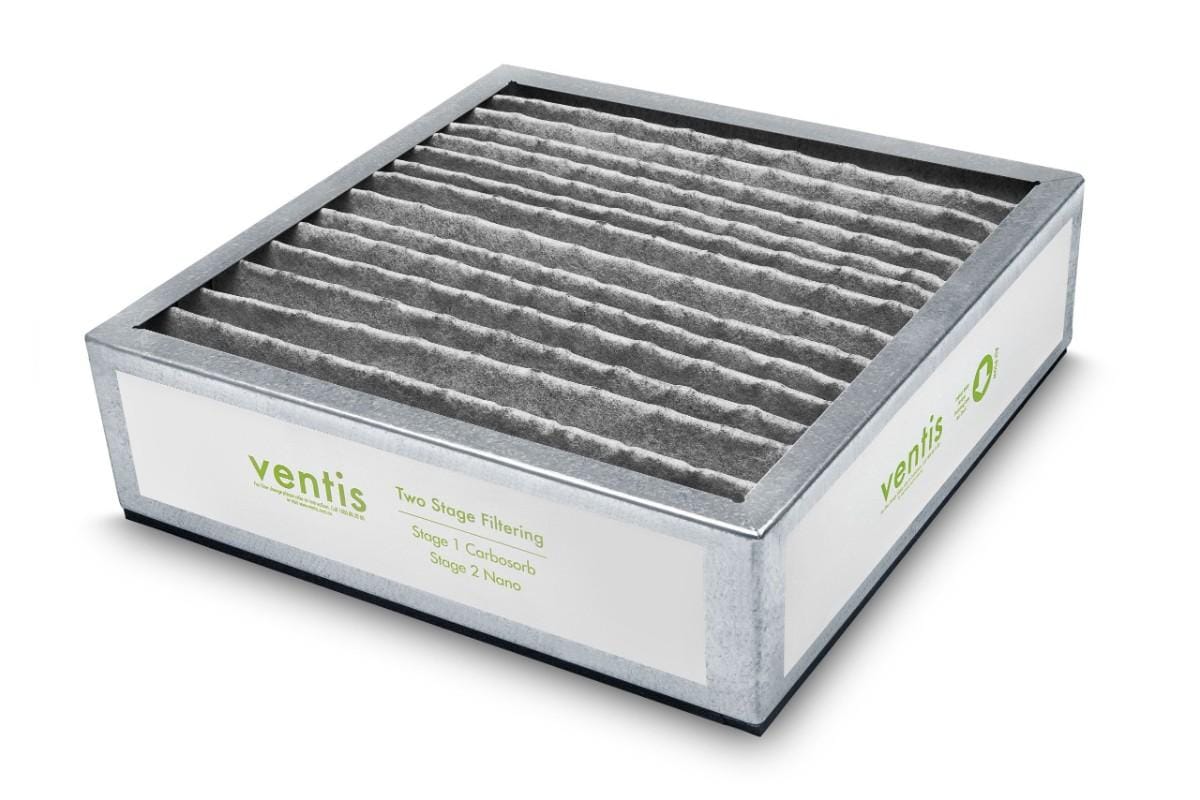
MERV 15
MERV 15 filters move into near-HEPA performance territory and are used where very high indoor air quality is required.
They typically capture:
- ≥95% of particles 0.3–1 micron
- ≥95% of particles 1–3 microns
- ≥95% of particles 3–10 microns
They are much more effective against:
- Fine combustion particles
- Airborne bacteria
- Virus-carrying aerosols
- Industrial pollution
MERV 5 is commonly used in hospitals, medical clinics, laboratories, clean manufacturing and high pollution environments.
Airflow & System Design Considerations
As well as filter type and performance, airflow and system design are also important factors when selecting a ventilation filter. The section below outlines key airflow considerations and highlights the advantages of MERV 13 filtration.
MERV 13 Advantages:
- Lower pressure drop
- Better airflow
- Easier retrofit into existing HVAC systems
- Lower fan energy consumption
- Longer filter life in residential applications
Noise & Fresh Air Ventilation Applications
MERV filters are commonly used in ventilation systems designed to allow windows to remain closed while still providing a continuous supply of fresh air. This is particularly beneficial in areas affected by aircraft noise, road traffic noise or other external disturbances, helping to improve indoor comfort without compromising air quality.
MERV 13
Usually provides the best balance between:
- Filtration
- Airflow
- Noise attenuation
- Energy efficiency
It is widely considered the practical “sweet spot” for:
- WSIA flight path homes
- Bushfire smoke reduction
- General urban air quality improvement
MERV 15
Better where:
- Occupants have severe respiratory sensitivity
- Outdoor pollution levels are extreme
- Additional fan capacity and acoustic treatment are incorporated
Cost Comparison
Finally, selecting the right filter involves balancing performance requirements with long-term operating costs.
The comparison below highlights some of the key cost considerations associated with MERV 13 and MERV 15 filtration, including maintenance frequency and energy usage.
Factor | MERV 13 | MERV 15 |
Filter Cost | Moderate | Higher |
Fan Energy Use | Low | Low |
Maintenance Frequency | 12 -15 Months | 12 -15 Months |
Which Should You Choose?
Choosing the right filtration option can be challenging, as there are several factors to consider, including filtration efficiency, airflow performance, operating costs and application requirements. To help simplify the decision-making process, we have outlined some general recommendations below.
Choose MERV 13 if:
- You want excellent residential air quality
- You need balanced airflow and energy efficiency
- Your existing HVAC system has a limited fan capacity
- You are designing quite fresh air systems
- You want a cost-effective long-term operation
Choose MERV 15 if:
- You need near-medical-grade filtration
- Occupants are highly vulnerable to airborne contaminants
- Outdoor pollution exposure is severe
Summary
Ventis systems incorporate MERV 13 and MERV 15 filtration due to their ability to deliver high levels of airborne particle removal while maintaining efficient airflow. As highlighted throughout this guide, these filters provide an excellent balance between filtration performance, operating efficiency and system compatibility. By utilising MERV-rated filtration, Ventis home ventilation systems help create healthier indoor environments without compromising ventilation performance or occupant comfort.
For most residential and light commercial ventilation systems, MERV 13 delivers the best overall balance of:
- High filtration efficiency
- Manageable airflow resistance
- Lower operating cost
- Better acoustic performance
MERV 15 offers substantially higher fine-particle removal but generally requires:
- negligible reduction in air flow resistance
- Low operating cost
- The carbon element of the filter reduces odours
- Very good acoustic performance
At Ventis, both MERV 13 and MERV 15 filtration options are available depending on the requirements of your home, building, or ventilation project. Understanding the differences between filtration efficiency, airflow performance, and application suitability can help ensure you select the right solution for your indoor environment.
For free expert help and advice, or learn more about Ventis fresh air ventilation systems and available filtration options, contact our team or visit our website.
Read More About: Negative Pressure Subfloor Ventilation System
FAQ's - Common Questions About HEPA vs MERV Filters
What is the main difference between HEPA and MERV filters?
HEPA filters are designed for maximum particle capture and are commonly used in medical and specialised environments. MERV filters are designed to balance filtration performance with airflow efficiency, making them more suitable for household ventilation systems.
Is MERV 13 enough for residential homes?
Yes. MERV 13 filters are considered highly effective for most residential homes and can help capture dust, pollen, smoke particles, mould spores and other common airborne pollutants.
Do ventilation systems help reduce house humidity?
Yes. Proper ventilation systems can help improve airflow and reduce excess indoor moisture, which may assist with reducing house humidity and improving indoor comfort.
Can ventilation help stop window condensation?
Improving airflow and reducing indoor moisture levels may help minimise condensation build-up on windows, particularly during colder months or in poorly ventilated homes.