Most people don’t spend much time thinking about what’s happening under their house until something feels off. It’s usually small at first- a smell you can’t quite place, a damp feeling in certain rooms, or maybe the floors don’t feel quite right anymore. Nothing urgent, but not normal either. That’s often where it starts. In a lot of homes, especially older ones, those problems aren’t coming from inside the house. They’re starting underneath, where air isn’t moving and getting stale with moisture. That’s where subfloor ventilation comes in. Not as a “quick fix,” but as something that addresses the root cause: trapped moisture in subfloors.
What Is Subfloor Ventilation?
Put simply, it’s the airflow under your home. There’s usually a gap under the floor structure. If fresh air moves through it, things stay dry. If it doesn’t, moisture sits there. And when moisture sits, it builds.
An under-floor ventilation system just keeps that air moving. It doesn’t need to be complicated. It just needs to be consistent.
Why Subfloor Ventilation is Important?
Moisture rarely stays where it starts.
If it builds up underneath, it slowly works its way up. You don’t notice it immediately, which is why it gets missed. Then eventually:
- things start smelling
- materials start changing
- The air inside the home feels heavier
By that stage, it’s been happening for a while. Fixing moisture early is easier than dealing with what it turns into later.
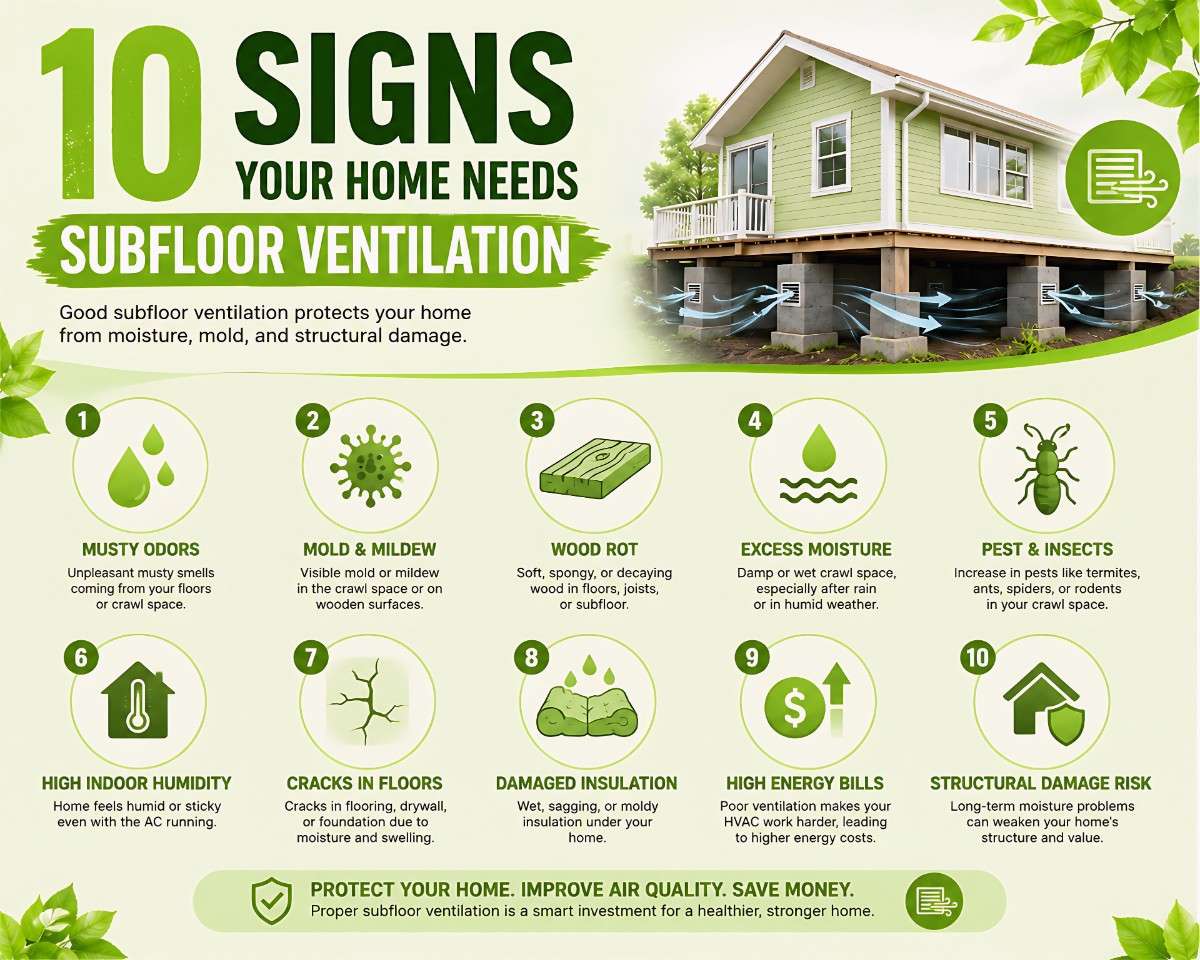
10 Common Signs Your House Needs Subfloor Ventilation
1. Persistent Musty Odours in the Home
That damp smell some houses have, it doesn’t usually come from nowhere. If it sticks around, even after cleaning, it’s often being pushed up from underneath.
2. Visible Mould or Mildew Under the House
If you’ve seen mould forming underneath, that’s not subtle.
It means moisture has been sitting there long enough to allow growth.
And it won’t stop on its own.
3. Uneven or Sagging Floors
Floors don’t just shift randomly.
Sometimes it’s gradual. You only notice it when something doesn’t sit flat anymore. Underneath, the timber may already be affected.
4. Increased Allergy Symptoms Indoors
This one catches people off guard.
You might not link air quality to what’s under the house, but damp conditions and mould spores. It all travels upward eventually.
5. Persistent High Humidity Levels
If the house feels damp even when the weather isn’t, that’s worth paying attention to.
Especially if it doesn’t change with ventilation inside the home.
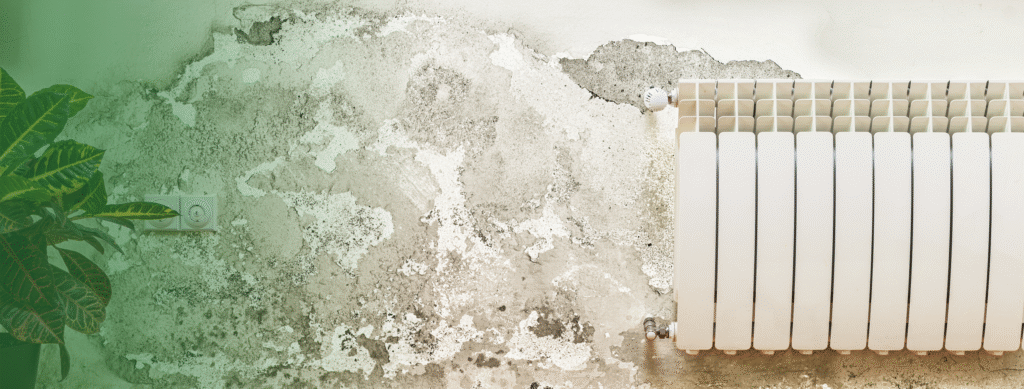
6. Rising Damp on Walls Inside the Home
Moisture moves upward through materials.
You’ll see it near the lower parts of the walls first. Slight discolouration, maybe some bubbling. Easy to ignore at first.
Usually gets worse.
7. Increased Pest Activity Under the House
Pests follow moisture.
Damp areas are easier for them to live in, especially where things aren’t disturbed often.
So if you’re seeing more activity, it’s often linked.
8. Condensation on Windows and Walls
Not always about cold air.
Sometimes the air inside is just carrying too much moisture overall. It shows up as condensation, but the source can be somewhere else entirely.
9. Warped or Discoloured Floorboards
Timber responds to moisture.
It expands, shifts slightly, and changes colour. Doesn’t always look dramatic – just… different over time.
10. Visible Damp, Rot or Mould Under the House (Subfloor Space)
If you can see it clearly underneath, the issue isn’t new.
That kind of buildup takes time. At that point, it’s less about “if” there’s a problem and more about how long it’s been there.
What Causes Poor Subfloor Ventilation in Sydney Homes?
Poor ventilation in the subfloor is rarely just one thing.
Sometimes vents are blocked. Sometimes there just isn’t enough airflow built into the design. In other cases, the ground itself holds moisture.
And Sydney’s weather, humidity, and rain don’t really help.
Once moisture starts building underneath, it tends to stay there unless something changes.
How Ventis’s Subfloor Ventilation Helps in These Situations
The key is movement. Not one-off airflow, but continuous movement. That’s what stops moisture from settling.
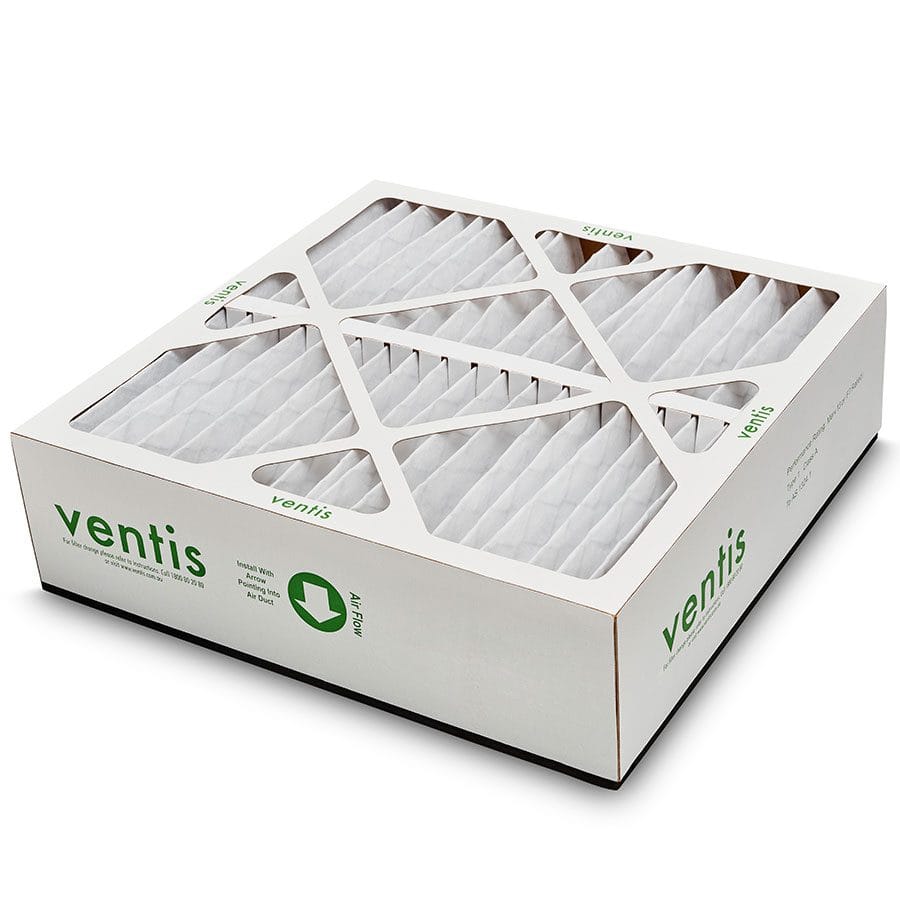
Ventis systems are designed around that idea, pulling damp air out and allowing fresh air in. Nothing complicated about the concept. But the consistency matters. Over time, that steady airflow helps dry out the space underneath and stops conditions from getting worse. And once that happens, a lot of the symptoms inside the house start easing off as well.
Why Early Action is Crucial
Most of these signs don’t feel urgent when they first show up. That’s why they get ignored.
But moisture doesn’t stay at the same level. It builds. Slowly, then more noticeably. And eventually, it affects more than just appearance. Acting early avoids most of that. If you’re noticing a few of these signs at the same time, it’s usually not a coincidence. You can explore solutions here:
FAQ's - Signs Of Subfloor Ventilation
How do I know if I need subfloor ventilation?
Usually, it’s the combination of signs like smell, dampness, and visible moisture.
What are the signs of poor subfloor ventilation?
Musty odours, mould, condensation, and slight changes in flooring are the most common signs.
Does subfloor ventilation really stop mould?
Yes, ventilation helps stop mould from returning by removing the moisture that causes it in the first place.
Can a damp subfloor make you sick?
Yes, particularly through poor air quality, and if mould is present, it may trigger allergies or breathing issues.
What happens if the subfloor is not ventilated?
Moisture builds up, leading to structural and air-quality issues over time.
How much does subfloor ventilation cost in Sydney?
The costs entirely depend on the home, size, and system needed. Contact professionals at Ventis to get a service estimation.