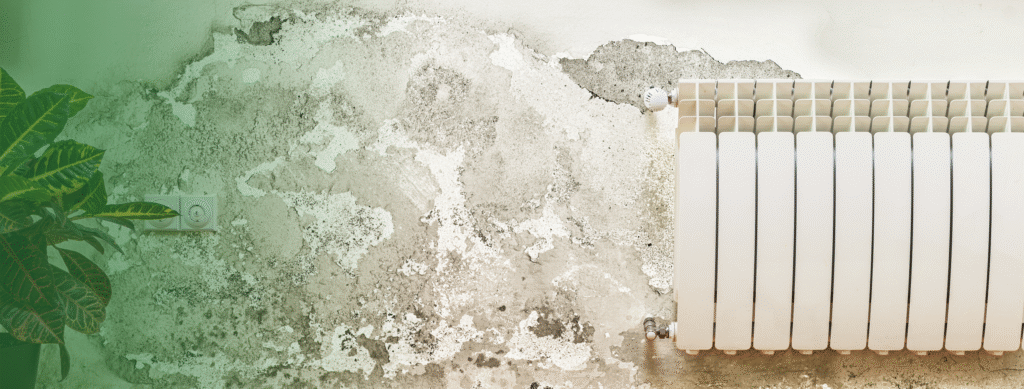
In damp and poorly ventilated spaces, you often find black or green blotches on walls or powdery stains on surfaces. That’s not art, it is mould growing in your house.
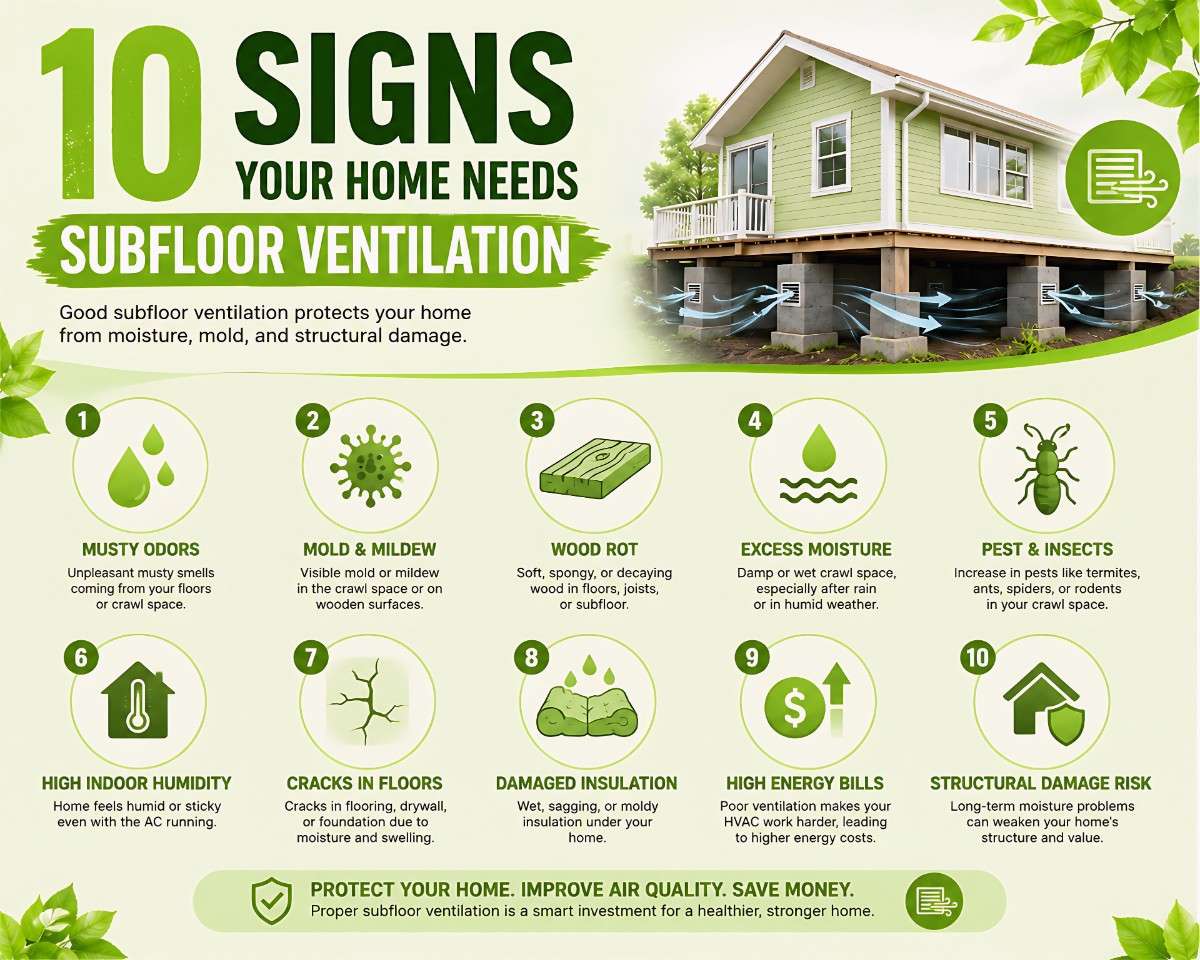
Beneath many Australian homes, especially in older builds, moisture accumulates in the subfloor. The dark, moist environment is the perfect breeding ground for mould. And when it goes unnoticed for long, it spreads rapidly, leading to musty smells, structural damage, and health issues.
Mould solution, in brief, is a subfloor ventilation system. Installing such a ventilation system targets the root cause. Improved airflow under the house stops moisture from growing. One could try doing surface treatments, but it will only mask the problem rather than treating it at the base.
Unlike surface treatments that only mask the problem, a ventilation system tackles it from the root cause, quietly and continuously.
What Is House Mould and What Causes It to Develop in a House?
Mould is only a type of fungus. It can grow rapidly in damp and humid environments. It generally spreads through airborne spores. These spores are very active, meaning they can cling to any surface, from timber to fabric. You might notice it in your bathroom, kitchen, or other less-visited and dark places.
The main triggers include:
- Poor ventilation
- High humidity
- Water leaks or rising damp
- Condensation from cooking, showering, or drying clothes indoors
Once mould sets in, it can damage your walls, ceilings, and furniture as well. This fungus is also harmful to your family living inside the house. Although you are not in the same level as the affected area in the subfloor, it can still affect the air quality, trigger allergies, and cause respiratory issues.
How to Reduce Mould in a House Naturally and Permanently?
Living with mould growth is out of the question for any well-kept Aussie home. Surface cleaning can remove the visible mould, providing you with a sense of relief. But not for long. It will be back. To actually get rid of mould growth, you need to improve the airflow of each room and control moisture.
Here’s what helps:
- Open windows regularly to let fresh air in
- Use exhaust fans in bathrooms and kitchens
- Fix leaks and seal gaps
- Avoid drying clothes indoors
- Install underfloor ventilation systems to manage moisture below the house
Here, you’re not directly removing mould but creating a less hospitable environment for it to grow and spread.
Here, you’re not directly removing mould but creating a less hospitable environment with ventilation to stop mould.
How Does a Subfloor Ventilation System Work to Prevent Mould?
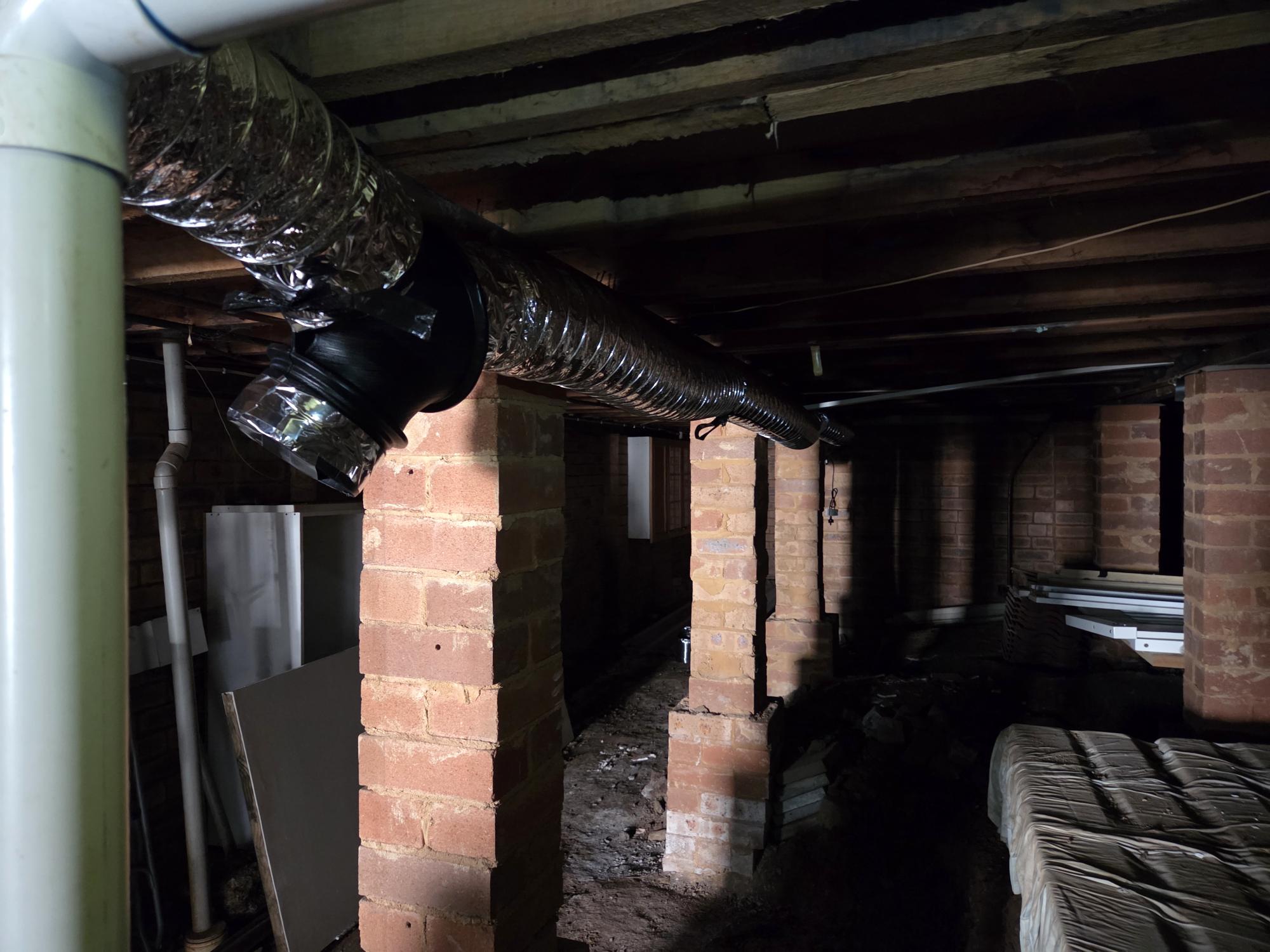
Let’s clarify what the subfloor part is- it’s the area between the bottom of your house and the ground beneath. The subfloor ventilation system works by sucking the stale and damp air out, which then gets replaced by fresh, dry air. This is a continuous process that maintains the flow of fresh air to the space. Dry air has no moisture, so with low humidity levels, mould can’t spread.
The system typically includes:
- Fans that extract moist air
- Ducting to direct airflow
- Timers or sensors to control the operation
By keeping the subfloor dry, the system makes the environment inhospitable for the mould. It’s a passive, low-maintenance way to protect your home from long-term damage.
What Are the Main Components of a Subfloor Ventilation System?
Every system is slightly different, but most include:
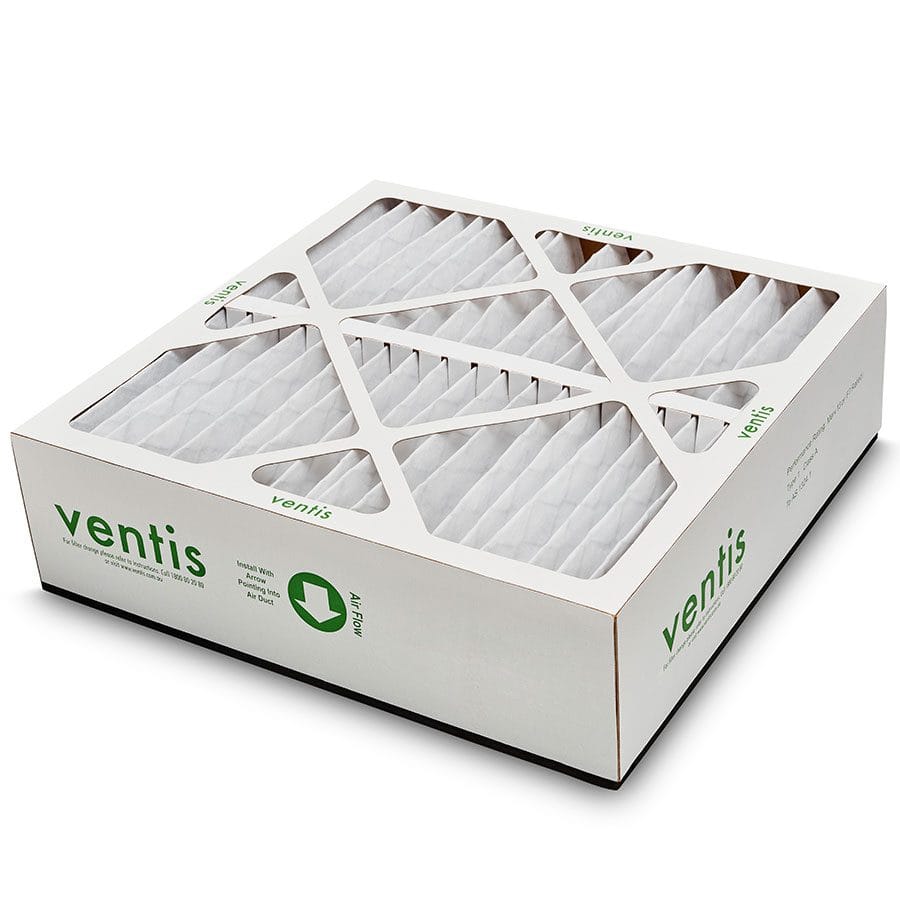
- Ventilation fan or exhaust: These are the heart of the system, doing most of the job. They pull out damp air and push fresh air in.
- Flexible ducting: Connects the fans to vents for direct flow
- External vents: Installed around the perimeter of the home to release stale air.
- Timers: To control the operations and maintain efficiency.
These components make up the subfloor ventilation system, balancing airflow to keep the subfloor dry and mould-free.
How Does Installing Ventilation Under the House Improve Indoor Air Quality?
The mould or any other issue happening just beneath your house also becomes your problem. It doesn’t just stay there. Moisture and mould will find their way to seep into living areas, targeting the air you breathe.
Installing ventilation under the house helps:
- Reduce airborne mould spores
- Lower humidity level
- Prevent condensation on windows and walls
- Improve overall comfort
Better air flow below means better living space above. Just a simple change can make a noticeable difference to your life.
How Proper Ventilation Stops Mould from Returning Permanently?
Mould is persistent, and it is not going to stop after surface cleaning. It can return if the environment stays the same, but proper ventilation breaks the cycle.
Continuous airflow will remove the dampness in the environment and replace it with dry air. Such a ventilation system, if installed in the subfloor region, will keep humidity in check. Even in the older homes during wet seasons, the limited airflow can be put in check with a proper ventilation system.
Unlike chemical treatments or temporary fixes, ventilation offers a long-term solution. It works quietly in the background, protecting your home year-round.
Why Choose Ventis for Subfloor Ventilation in Sydney?
In Sydney and the New South Wales region, Ventis has become a trusted name in home ventilation solutions. Our services are designed to work best in Australian conditions and tailored to suit each home’s layout and needs.
Here’s why homeowners choose Ventis:
- Local expertise with over 15 years of experience
- Customised solutions for each project
- Quiet, energy-efficient fans
- Professional installation and support
- Backed up local support
They’re not here to just install a system. Ventis has a team of technicians who understand your problem and help protect your home from mould growth.
Create a Healthier Sydney Home with Subfloor Ventilation
Mould is a friend to no one. A damp smell, unexplained condensation, and visible mould patches are signs of an unhealthy home. The problem could be directly related to the subfloor.
You can improve the airflow in your house, reduce allergies, eliminate dampness, minimise condensation, regulate the property’s temperature, and control mould and moisture by choosing a subfloor ventilation system. It’s the smart and low-maintenance way old houses should definitely get.
So, if you suspect mould patches at the bottom of your house walls and want to improve air quality indoors, it’s time to book a consultation with Ventis.
Read More Resources
FAQ's - Common Questions About Subfloor Ventilation and Mould Control
How long does it take to see results after installing a subfloor ventilation system?
As soon as the installation is complete, the subfloor begins to receive fresh air. Within a few weeks, homeowners can notice a difference in the air they breathe. Reduced smell is also a positive sign that can be noticed after a few weeks of moisture reduction.
What is the most effective way to reduce mould in the house?
The most effective and non-invasive way of removing mould is subfloor ventilation. Controlling moisture is the key, which can be achieved through proper ventilation.
How effective is underfloor ventilation in older Sydney homes?
Very effective. Older homes often lack natural airflow beneath the floor. Installing a system helps prevent rot, mould, and structural damage, especially during humid months.